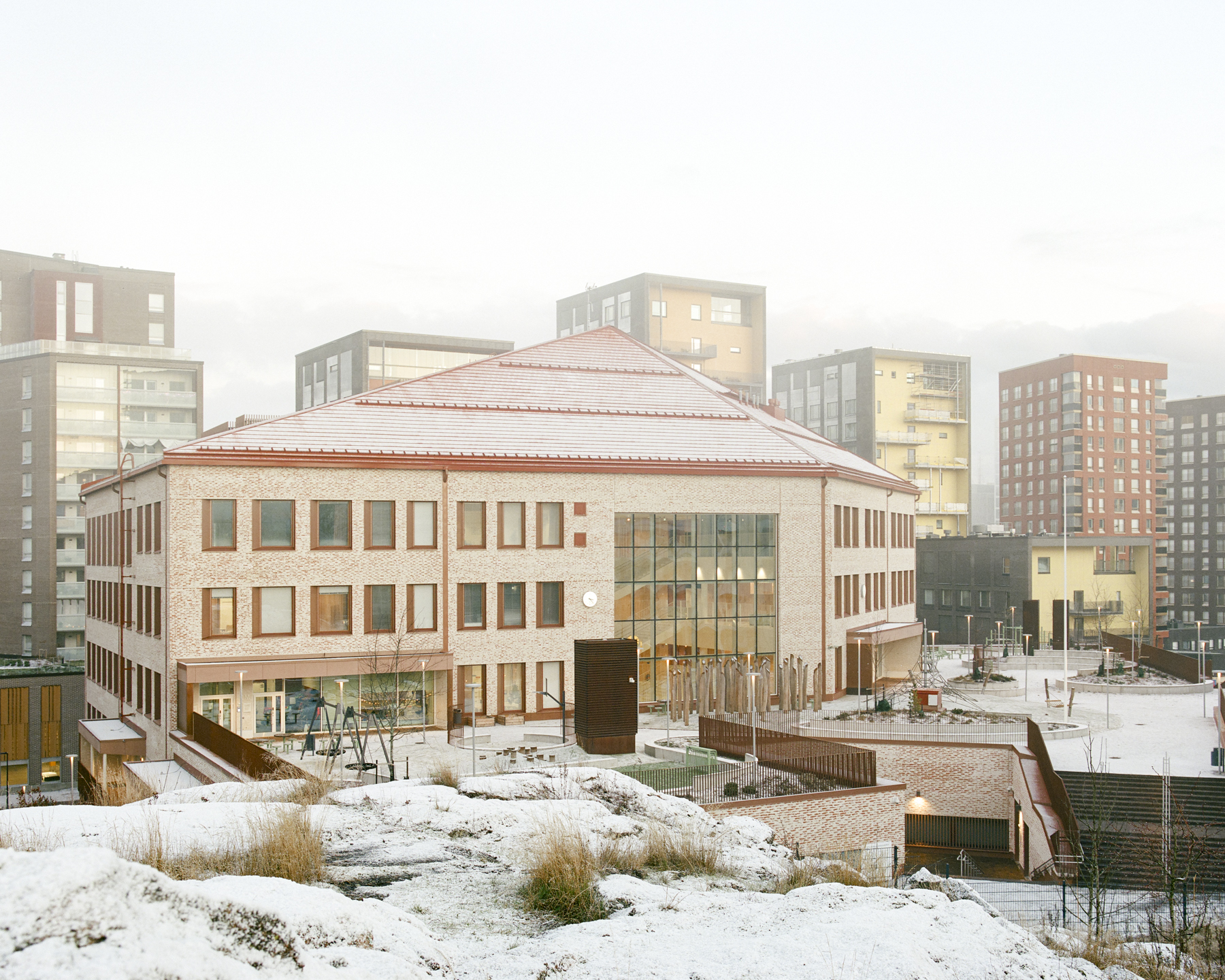


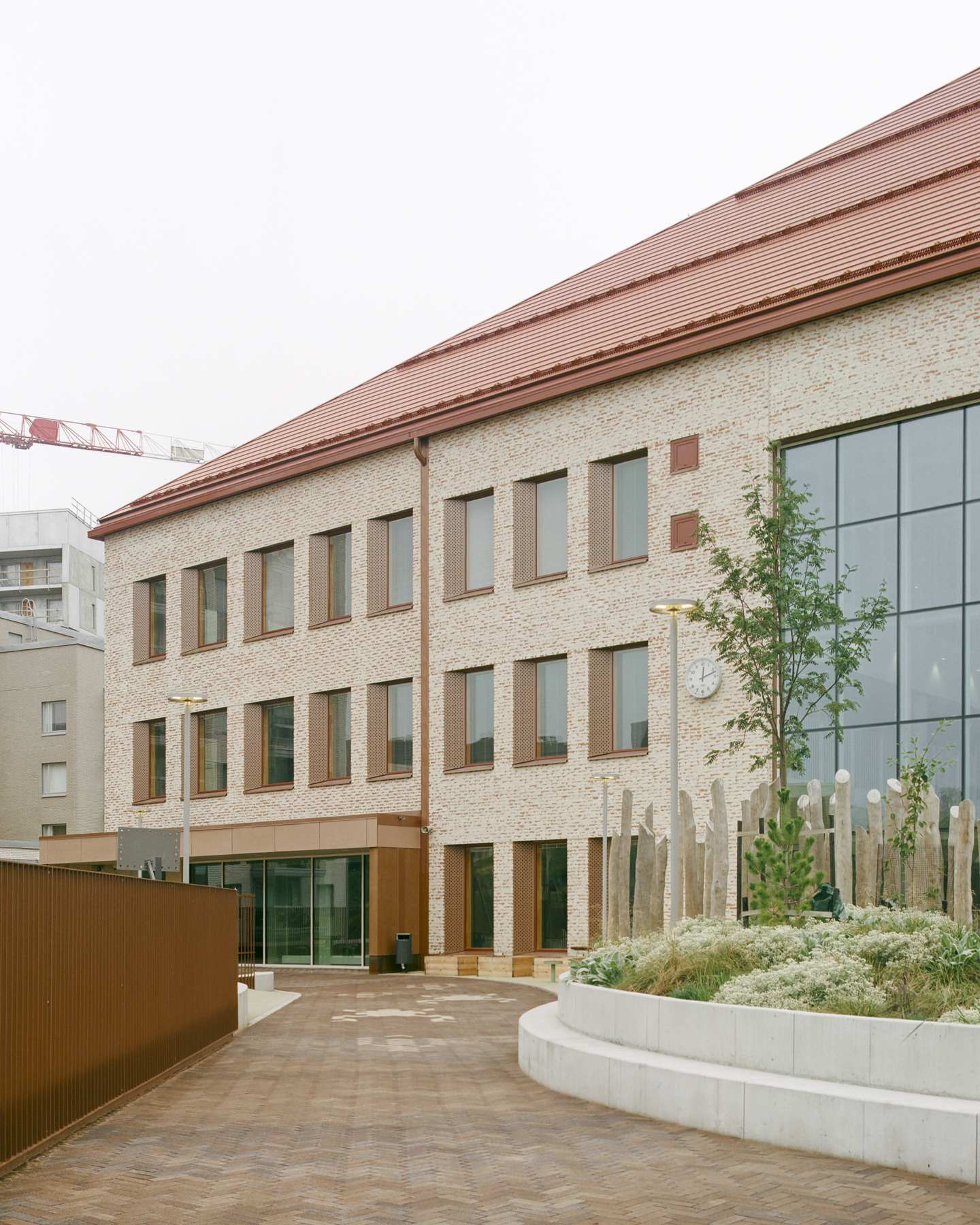
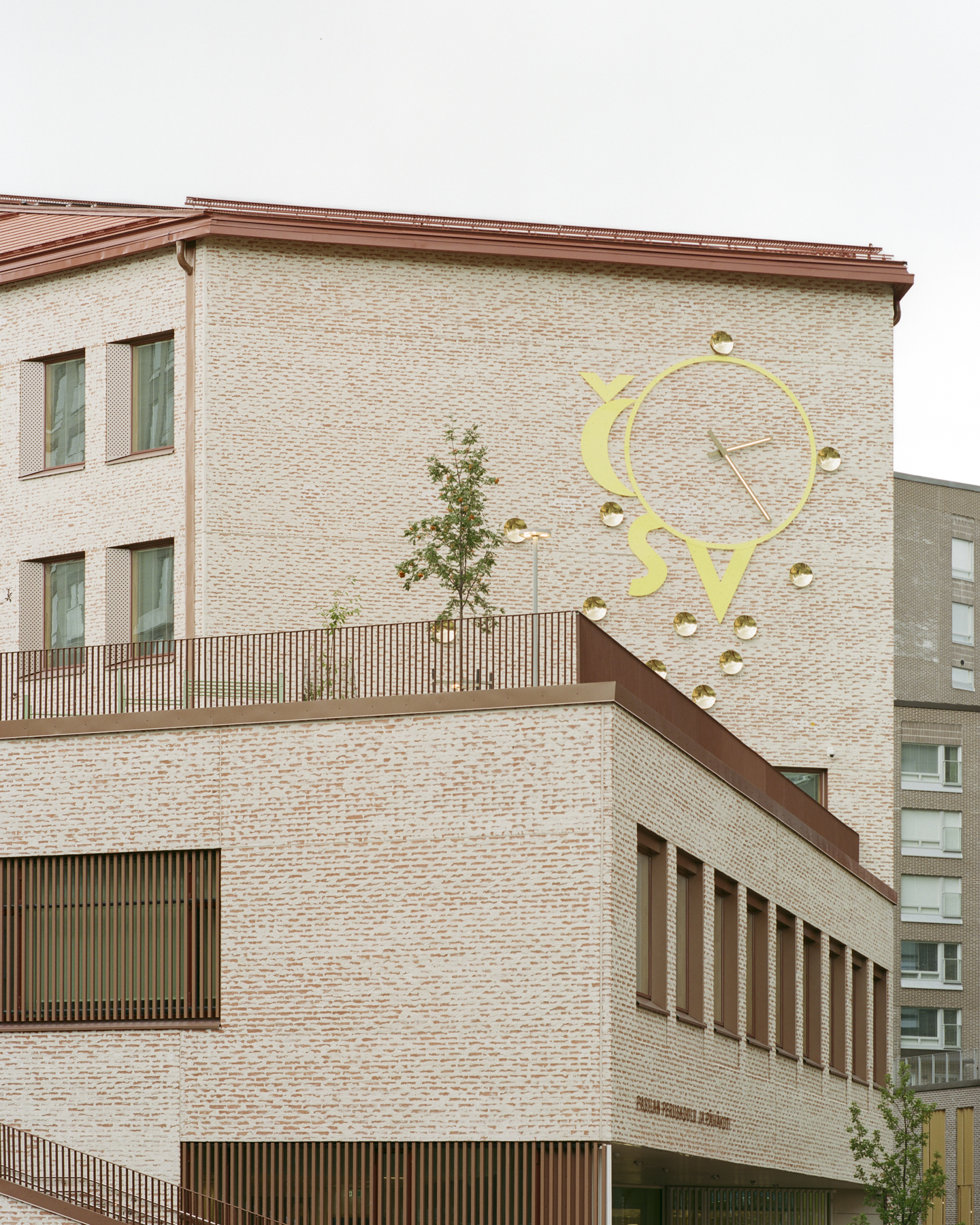
The building plays a particularly significant visual role as the culmination point to the northern end of the north–south park axis of Höyrypuisto. It has been positioned so that its taller section sits harmoniously in the background of this long view. Linking the past to the present, the recognizable red-brick architecture echoes that of the old Pasila school building as well as relating to the historical railway yard area. The façade clock and the atrium’s komsiopallo (hanging art globe) are works by artist Outi Pieski.
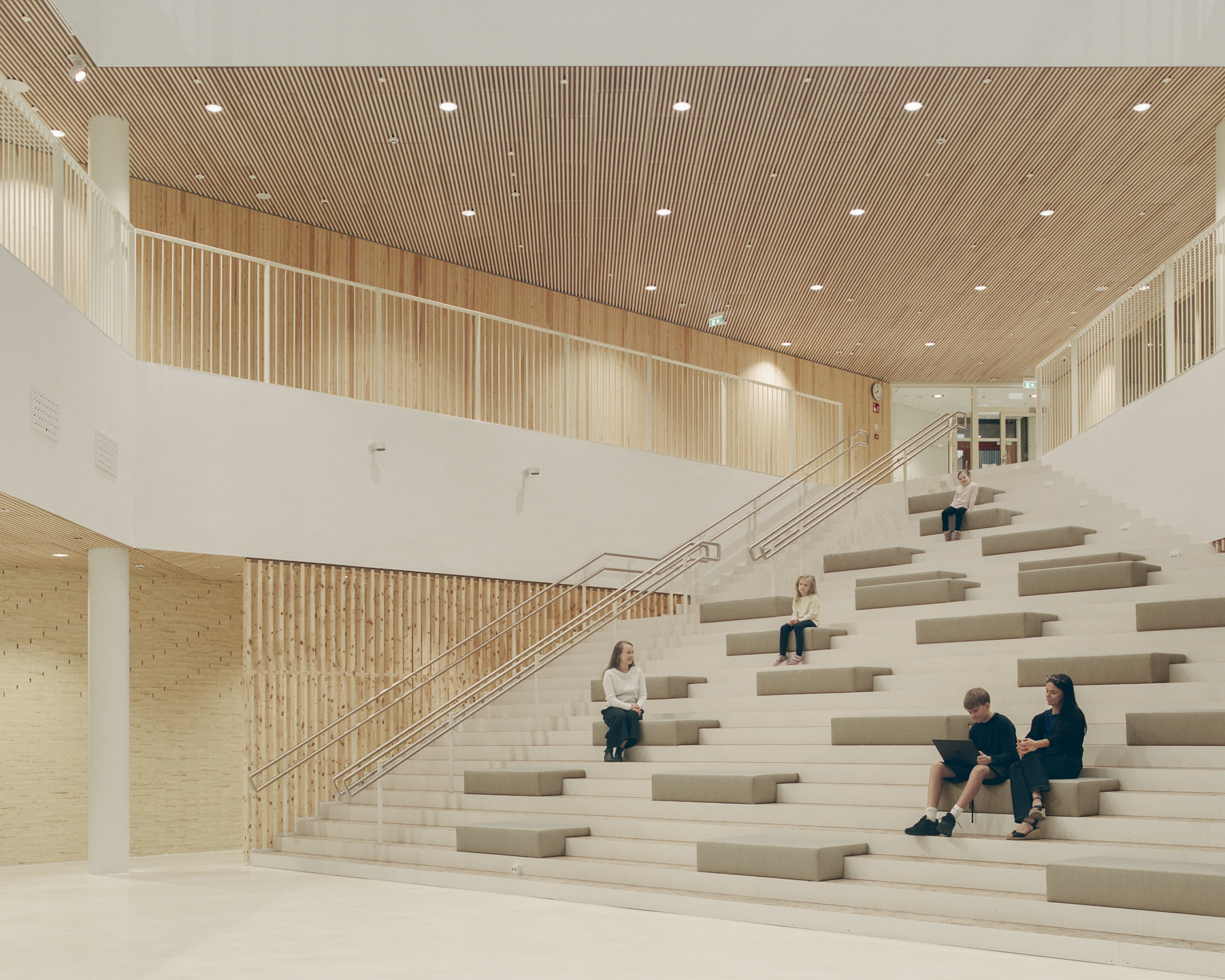


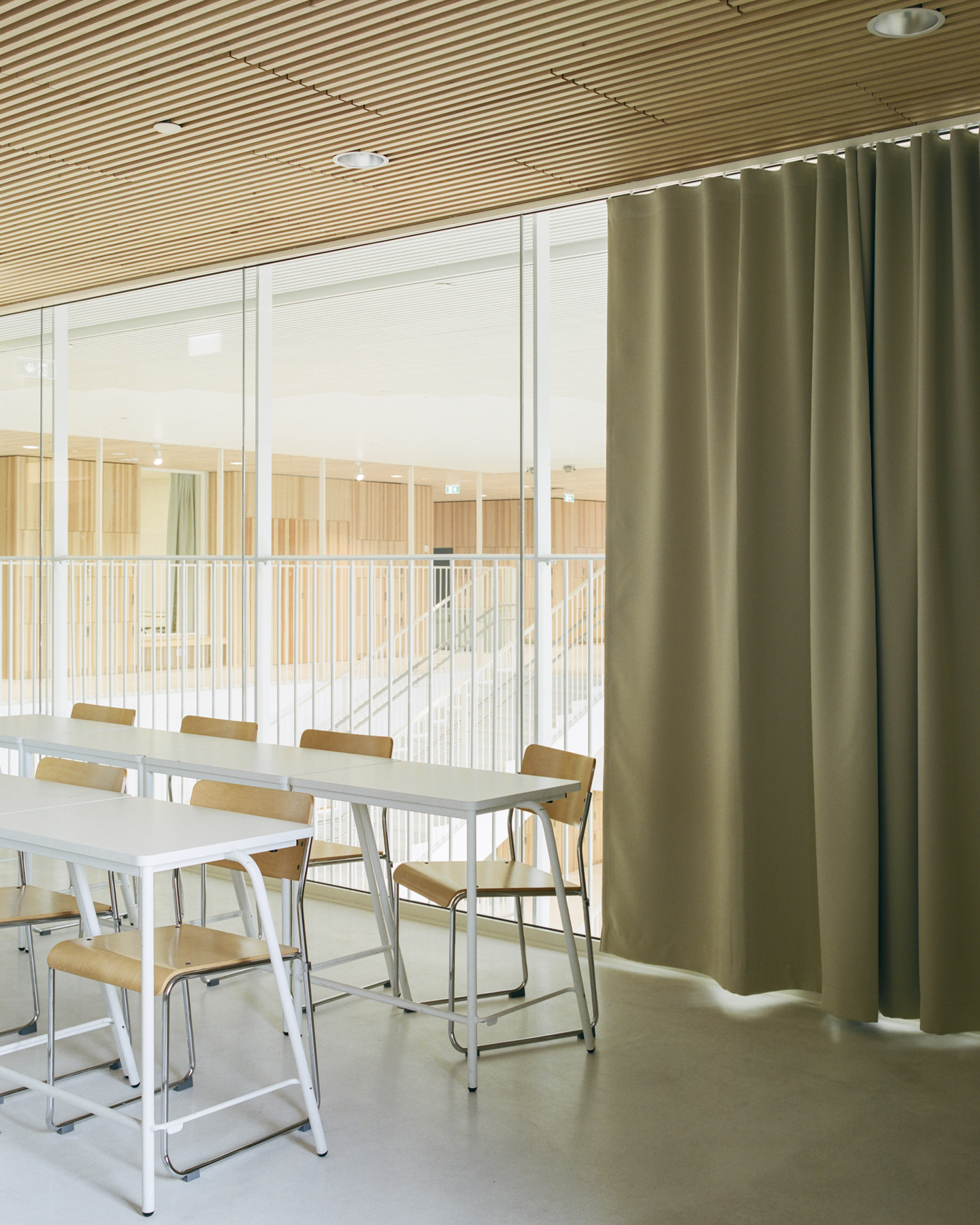
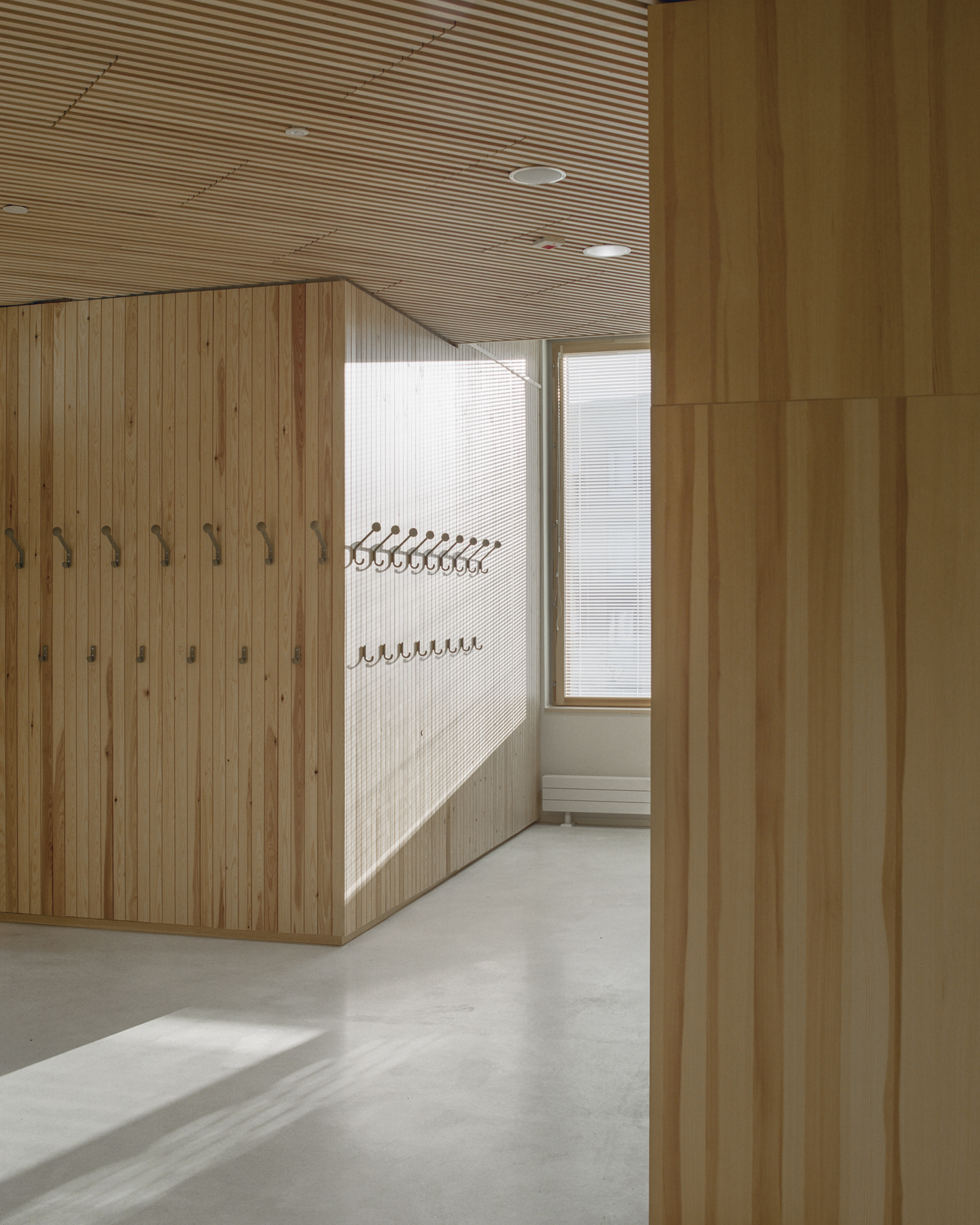
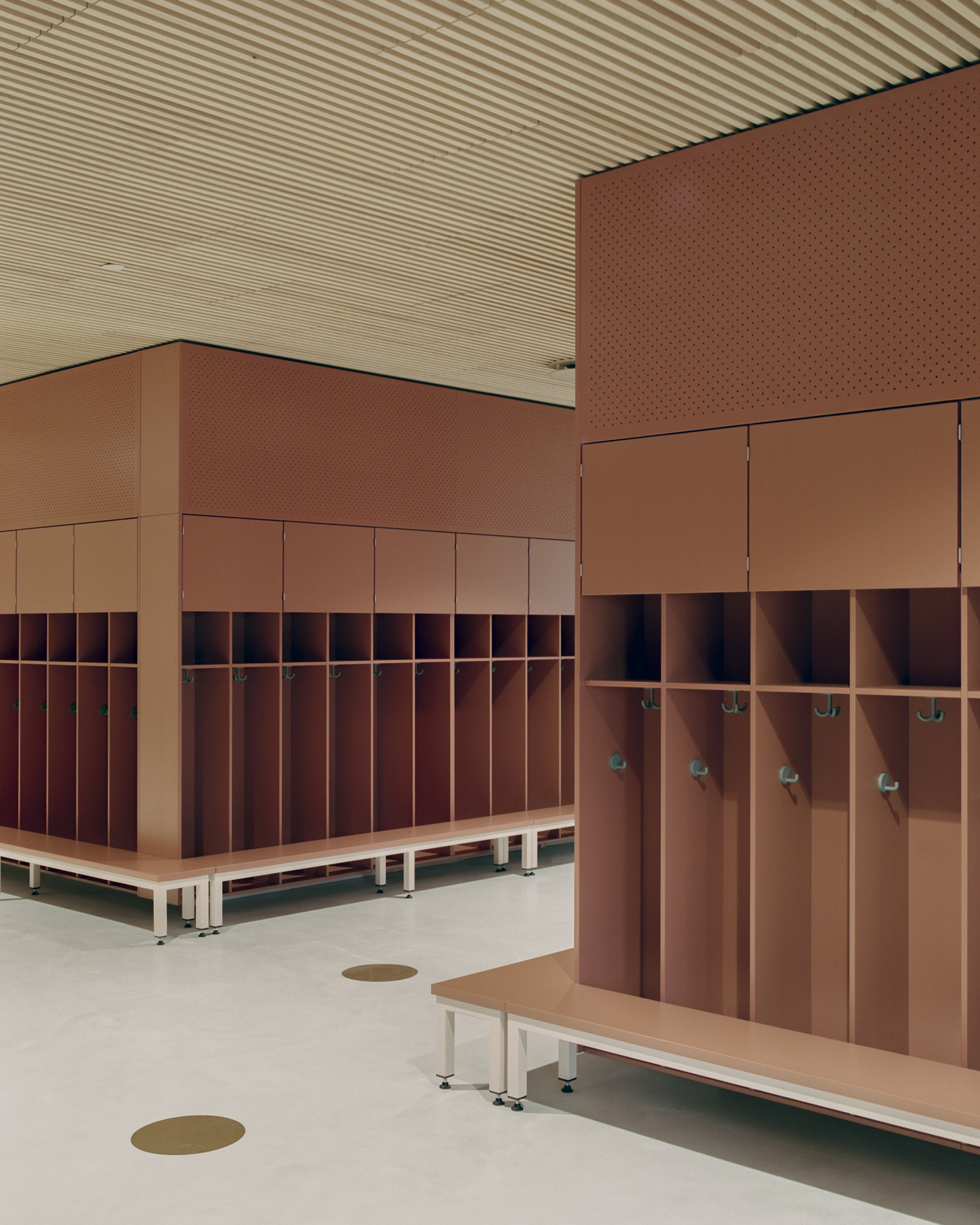
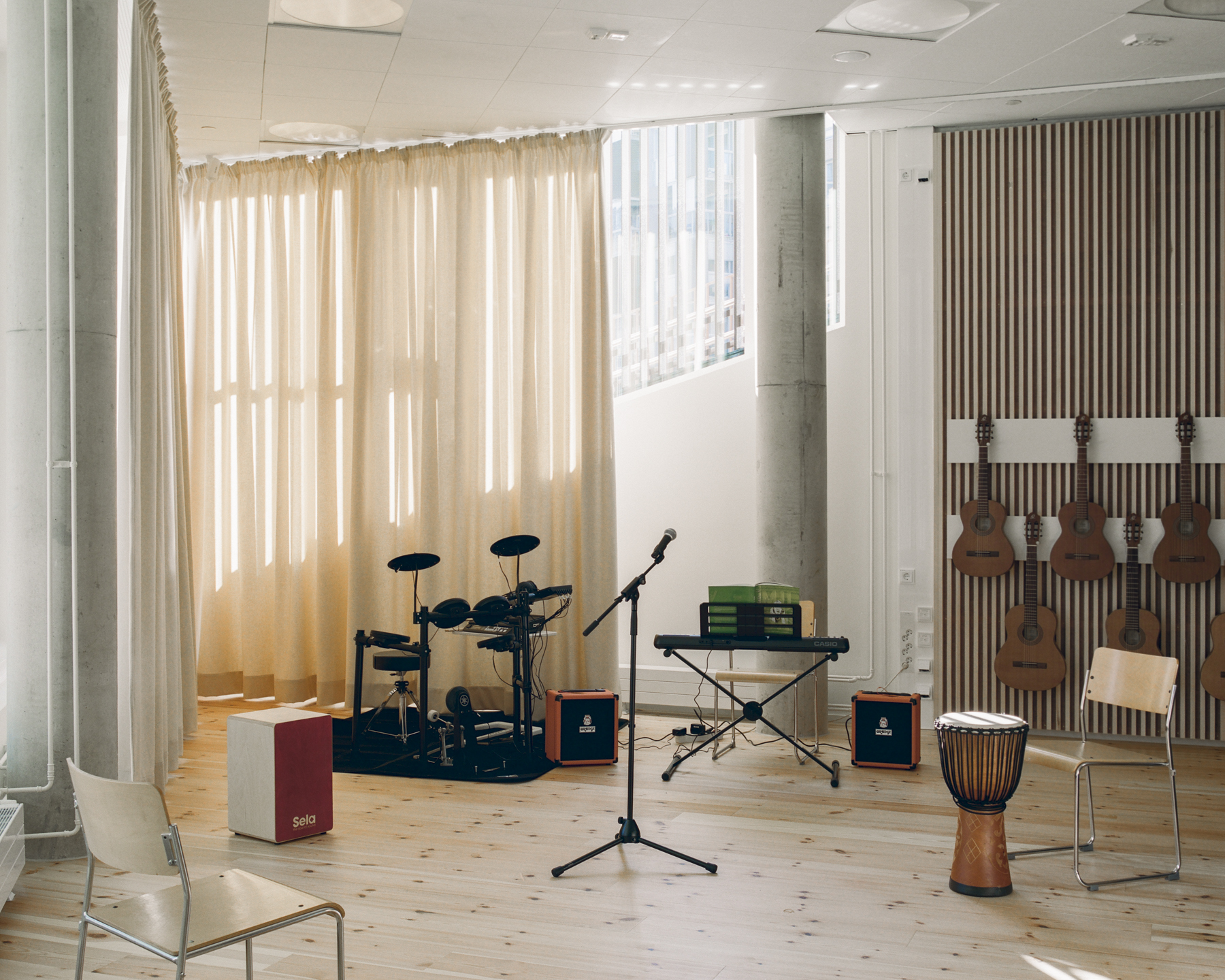
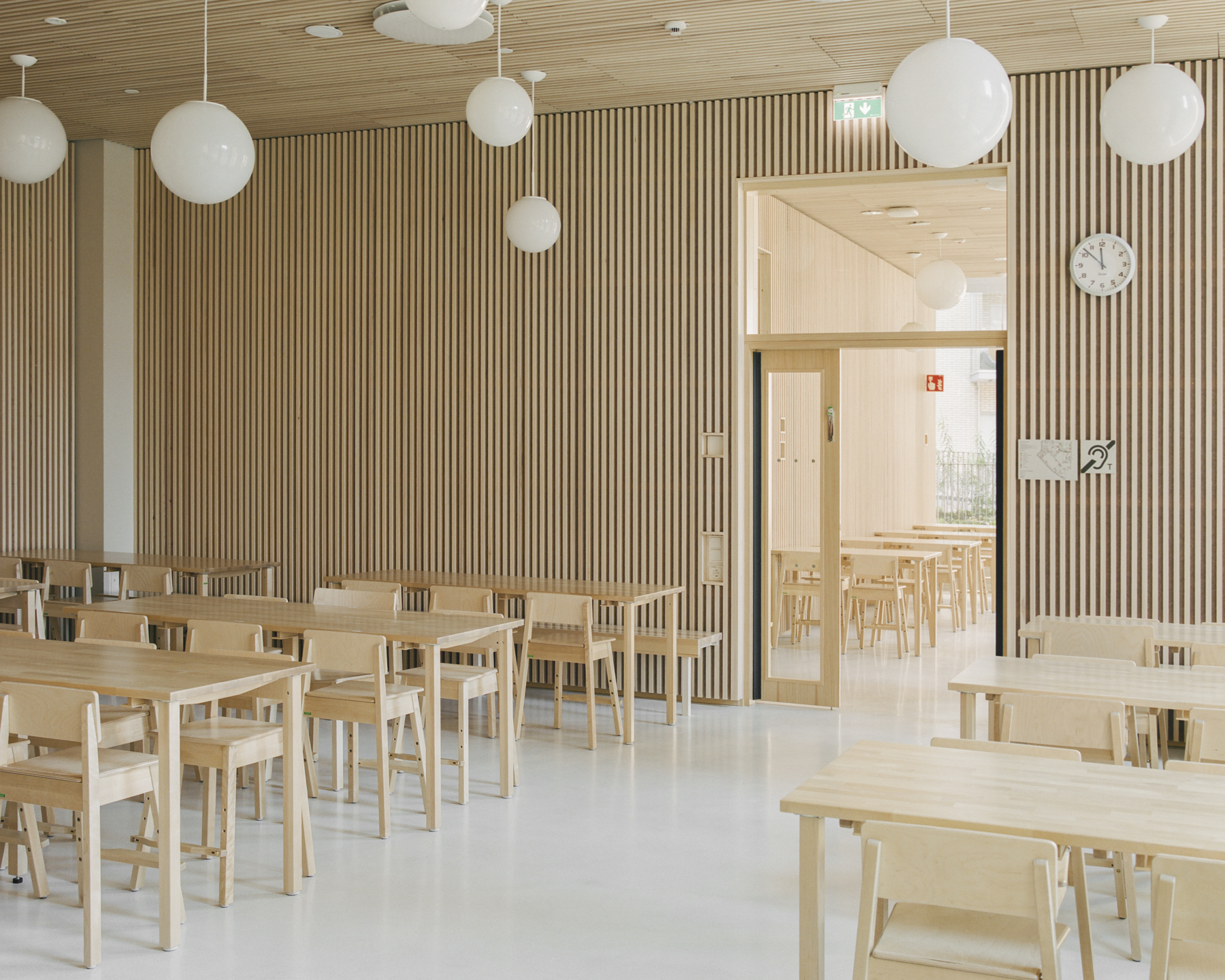
The material palette of the exterior continues inside into the entrance level where the walls are brick. For the interiors, wood has been used extensively on ceilings, furniture, and wall surfaces, for both its environmental benefits as well as for its positive effect on indoor air quality. Natural materials and tones were chosen to create a calm, lively and bright ambiance. The varied use of materials also helps orient users and gives different spaces their own character and identity.
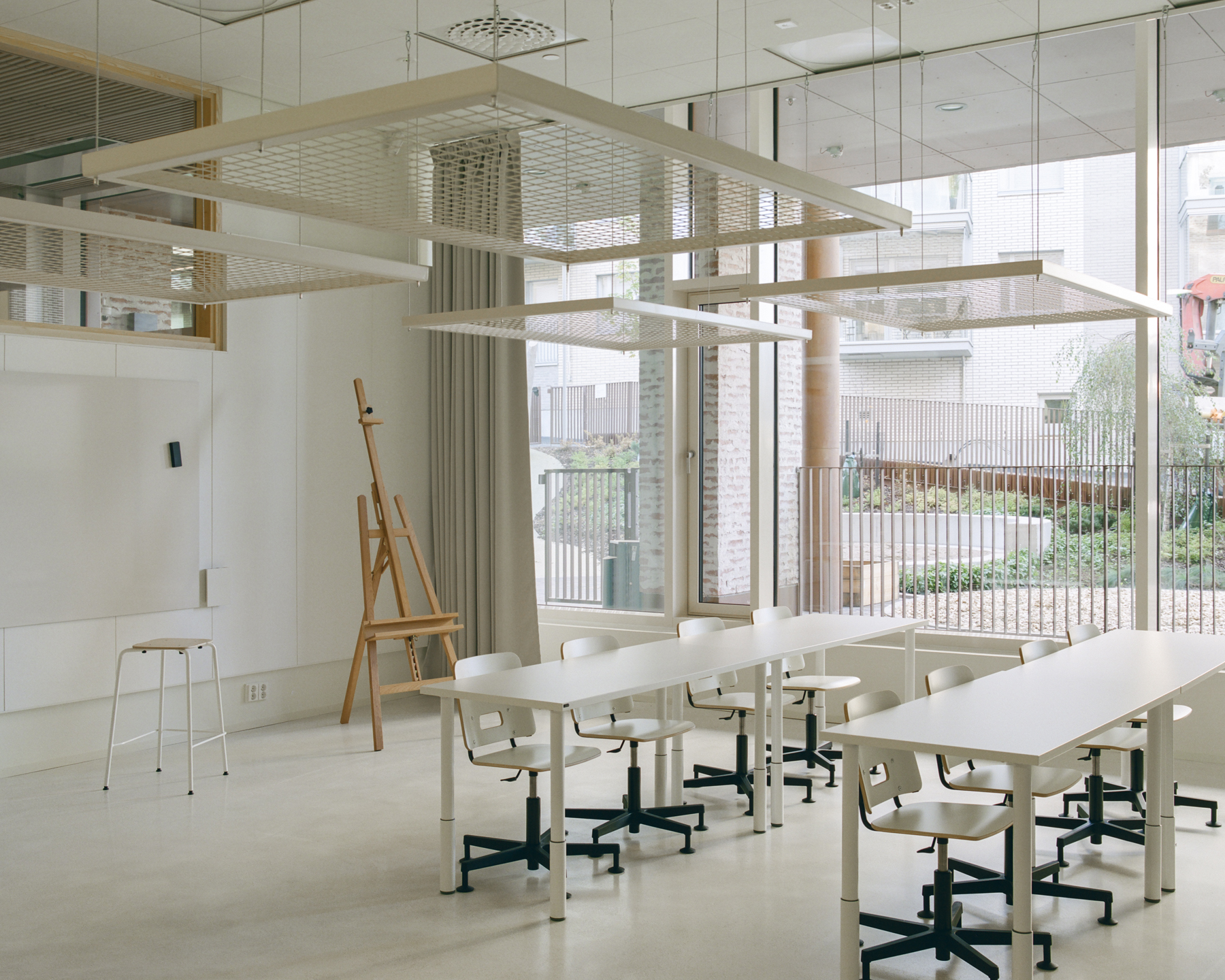
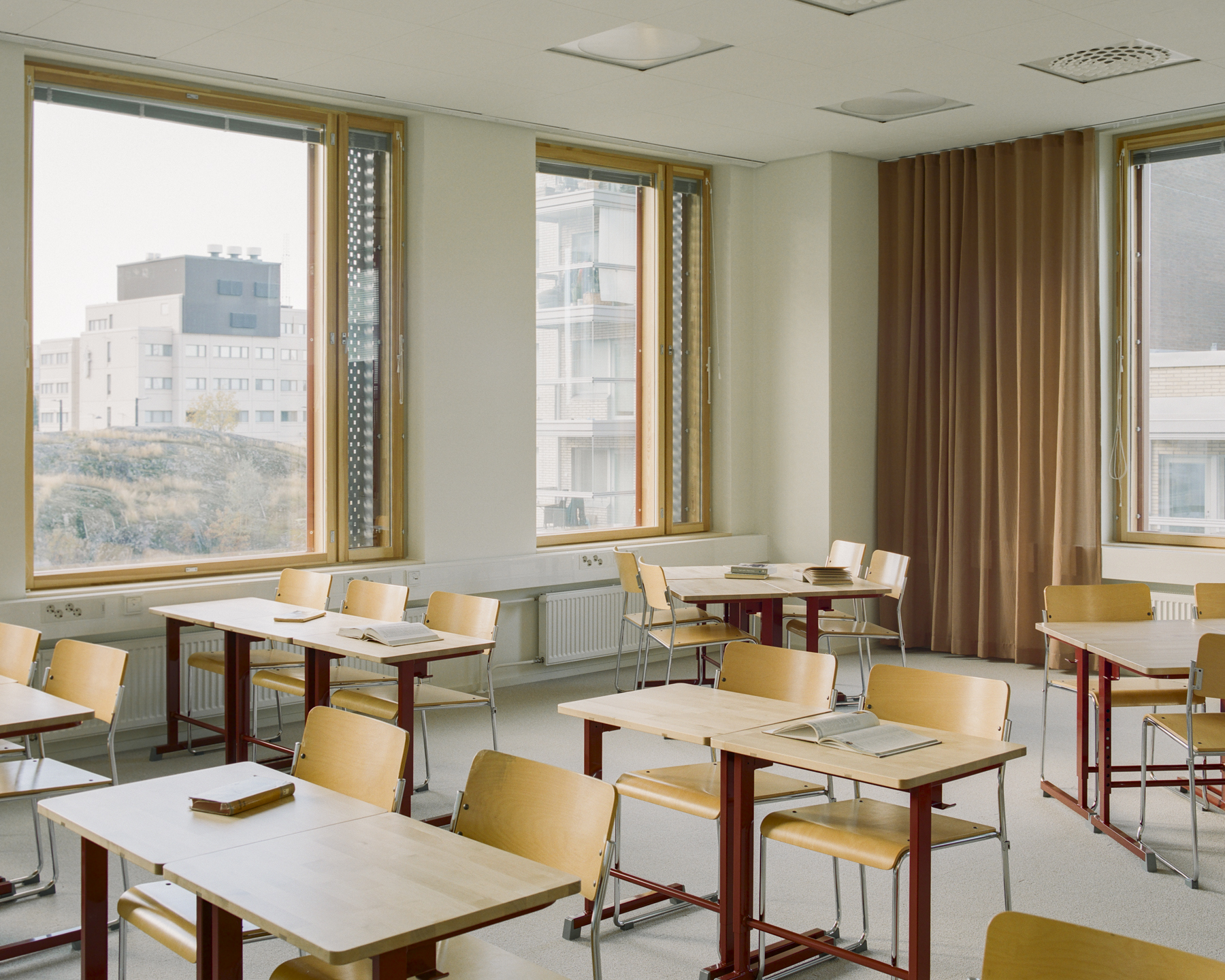
Natural light plays a pivotal role both outside and inside the building. The southwest-facing large glass wall allows light to flood in unobstructed and the organization of spaces around the central light well has strongly shaped the interior architecture. The window area to outer wall ratio is considerable—another key factor that enhances brightness indoors. Many of the internal partitions are also glass which, in addition to increasing light, promotes a sense of community and makes communication between spaces easier.


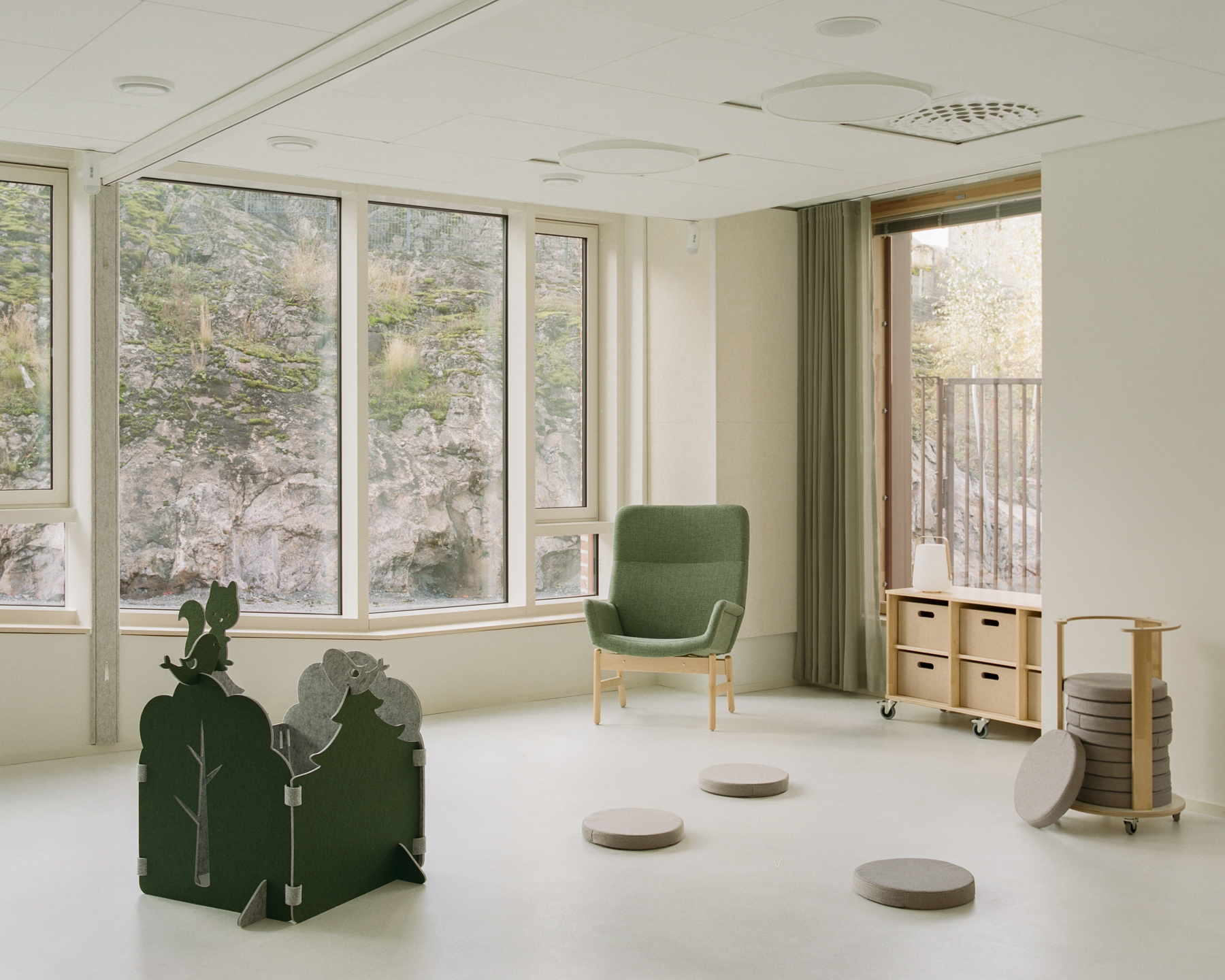
The design carefully considers views and connections from Halkopiipunkallio toward the school and daycare yards and the school building behind. The school’s outdoor areas are located almost entirely on the roof of the lower section, where sunlight reaches all year round. The daycare’s playground is also relatively bright in the morning and afternoon. The abundance of natural light benefits both users and the vegetation on the rooftop yards. The scenery from the learning spaces point towards mostly lush greenery which positively affect the pupils and teachers alike.


In line with the City of Helsinki’s educational goals, the school building makes efficient use of space while providing versatile facilities for community use. Pasila Comprehensive School accommodates around one thousand students and the building also houses the Aurinkokello Daycare Centre for 200 children. The building’s spaces are clearly organized into two parts: a two-story base containing communal functions and a taller, more private section with general learning areas.
Entrances are located on several sides according to their use. The spatial layout promotes a sense of community and interaction among the school’s users. The main entrance from Tulistimenkatu leads into a spacious, multifunctional central hall on the first floor. This communal space, opening toward both the surrounding city and Halkopiipunkallio, is anchored by an open staircase accessible to people of all ages. The grand, open staircase acts as the heart of the building, connecting and orienting circulation. The large complex can be understood at a glance through the light well that extends through all floors. The central space offers diverse views both inside the building and to the outdoors, with natural light shaping the atmosphere throughout the day. Circulation routes pass by the central space on every floor, guiding orientation within the vast school.