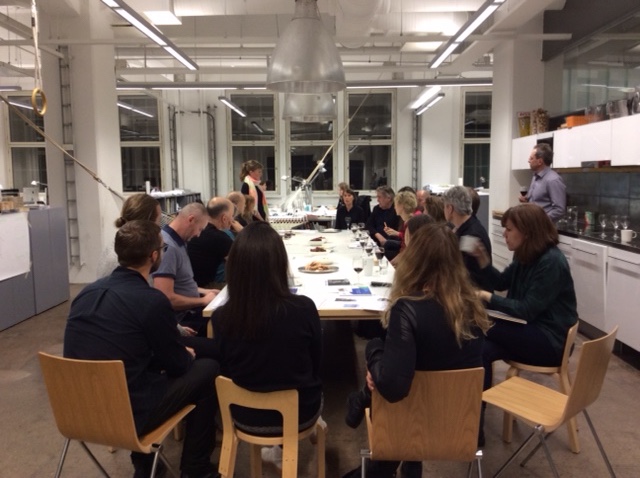
On February 4th, we held a discussion evening at our office on a topic that has concerned us for a long time. About twenty participants from various fields attended. Thanks to everyone who joined! The evening was highly engaging and insightful, opening new perspectives on this important issue.
Energy efficiency vs. material efficiency (resource wisdom)
Lifecycle vs. operational energy efficiency
Detail wisdom, e.g., drip edges on wooden buildings
Legislation should differentiate between massive and multi-layer constructions
Multi-layer constructions are only more energy efficient in calculations; actual consumption should be considered
Mineral wool / multi-layer structures inevitably mold → solution: massive structures (log, stone, CLT, honeycomb blocks) + airtight interior
Problems with porous insulation materials are pronounced in northern climates with large temperature differences
CLT (despite containing polyurethane glue) is better than multi-layer structures (public building exemptions for log constructions being removed; similar exemptions expected for other massive wood structures in residential buildings)
Energy regulations often ignore vertical temperature differences in high-rise building facade insulation cavities, which can lead to mold growth and indoor air problems even if interiors are airtight
Closed-cell insulation better than porous; switching from mineral wool to hard insulation (e.g., EPS) may improve indoor air quality
Breathability ≠ vapor permeability, mineral wool does not transport moisture unlike flax or wood fiber insulation
Breathable wall constructions (massive wood, clay-straw, breathable insulation) can produce healthy houses
Current regulations require thick walls that hinder drying from inside heat loss
Adding insulation to massive wood exteriors leads to cold insulation and mold risk – assumption that mold is harmless if it stays outside is flawed
Perfect airtightness requirement is impossible in real-world conditions
Structures should be airtight and waterproof on the outside
Natural materials make airtightness challenging but help maintain indoor moisture balance (e.g., EcoCocon)
Overcomplicated controls on ventilation units; often poorly set
Construction site moisture protection inadequate; rain exposure common due to cost concerns with protective tents
Maintenance crucial for energy saving, but occupant behavior not accounted for
Saving money and time is a top priority for builders
Denmark favors small cooperative building projects where owners care better for their buildings
Energy regulations should consider building size; current Finnish rules focus on heated net area but moving to gross area may encourage loopholes
Industry lobbying strongly influences regulations (e.g., CLT exemptions)
Housing supply in the capital region is insufficient, so quality and alternatives are neglected
Construction companies and industry form a lobbying monopoly; fortunately, consumer power is growing
Allow exemptions in energy laws for massive structures (directive allows it; massive single-material constructions act as “heat storage”)
Remove heat loss averaging calculations – ineffective
Mandatory product declarations for materials
Mandatory moisture protection during construction for building and materials
Ban gypsum boards, mineral wool, vapor barriers containing harmful substances to allow material recycling
Measure actual energy use in homes, not just calculate it (include occupant behavior)
Allow building-specific mechanical ventilation intake and exhaust on same facade to avoid vertical shafts
Include embodied energy of materials in consumption calculations
Warranty period = building lifespan to help consumers understand building value
For more details, see Pentti Murole’s blog:
http://penttimurole.blogspot.fi/2016/02/energiaa-hometta-ja-epatietoisuutta.html